

Hypernormalization: “Business As Usual” During Political Crisis.
This is not normal.

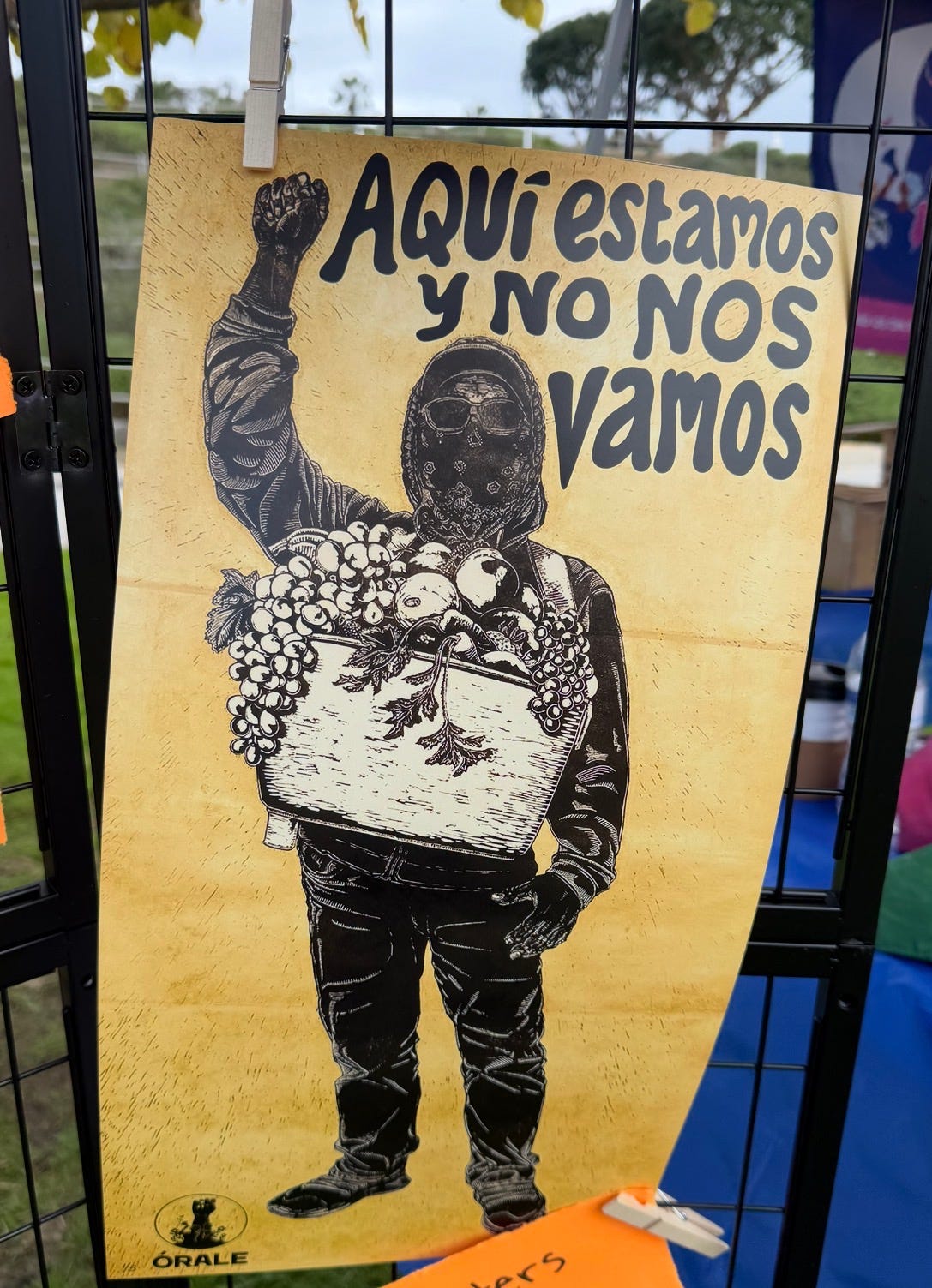
I go through a lot of trouble to not reach for my phone first thing in the morning. I used to habitually open the Instagram app, but now I use an app-blocker. Allegedly, scrolling first thing in the morning isn’t good for our brains. I remind myself of that when I reach for my phone. There will be time to doomscroll later. I justify this behavior by saying, I work in media. I have to be online.
All week I’ve felt heightened existential dread, vacillating rage and hopelessness, and the cognitive dissonance of having to continue on “as usual.” It’s the middle of January 2026, a time where I usually soak up the infectious renewed energy of a fresh calendar year. This time, I look around and think, none of this is normal.
While scrolling through social media, I see an image of a street vendor who was detained by immigration enforcement. The photo shows a rainbow umbrella covering two people selling tamales and champurrado. I notice a Jack-in-the-box in the background and immediately recognize its location. Garfield Avenue and Whittier Boulevard, along the imaginary border between East Los Angeles and Montebello. This intersection is on my running route. This recognizable street is one I’ve run down hundreds of times. I feel a heaviness in my chest, but I repost the image and again, think, this is not normal.
What happens next?
I exit the app and continue answering emails. My best friend comes over to co-work. We walked to the corner to buy a coffee.
A video of a landscaper in Downey who was almost detained by immigration enforcement, but was released after bystander intervention circulates on my timeline. The street looks familiar.
I send more emails.
Coverage from protests in Minnesota fills my algorithm. I feel my chest tighten.
I cook dinner.
I read opinion pieces, think pieces, and commentators weighing in on the political turmoil.
I have dinner with my family.
My day-to-day life remains the same, but the world around me feels more unstable.
The systems around us are collapsing.
I worry about my Spanish-speaking elders.
I worry about those I love who are undocumented.
I pray for the protection of protestors.
I dream of liberation. From Los Angeles to Minnesota, to Venezuela and Palestine.
This is not normal, yet there’s an expectation to clock-in to work, to send emails, to show up for Zoom meetings, to continue like everything is normal. Somatically, I feel it. Nothing is normal.
I try to ground myself in hope, in community, and in art.
I cling to this Toni Morrison quote, “There is no time for despair, no place for self-pity, no need for silence, no room for fear. We speak, we write, we do language. That is how civilizations heal.”
I tell my friends I love them. I hug my mother and wish her good morning. I kiss my partner goodbye before he leaves for work. I find pockets of love around me.
I listen to Victor Jarra, Susana Bacca, iLe, Ana Tijoux, and Bad Bunny.
I read Eduardo Galeano. I read Hanif Abdurraquib. I read James Baldwin, Audre Lorde, and some fiction for good measure.
I remind myself that my ancestors survived and that’s why I’m here.
But still–this is not normal.
May I always remember that this is not normal.
Mutual Aid Resources for Minnesota:
Resources for Los Angeles:
Beautifully said. It's been a lot, and I have been stuck on words to express what I am going through. I feel like I am also grieving a period in time when my master's degree was something that granted me safety in terms of a career, not just for my income, but also to pursue a career where I could do something for the community and something I loved to do, while also being able to have an income. I feel like my job being so unstable and at risk, while the entire infrastructure of public health is collapsing, is just making me not only sad, but grieving. At the same time, I am hopeful that as this system collapses, many of us help shape a new one that we are yearning to be possible.